

KoalaReads LogoKoalaReads
ReadingsFeaturesPracticeHow It WorksPricingAbout
Your German Learning Companion

Read more,
Learn more.

Master German through authentic reading. Build vocabulary with curated content and interactive exercises.

KoalaReads - Learn German through Reading
Deutsche Sprache
Authentic Content
Interactive Learning
100% Free
Beta Access
Interactive Experience

Experience interactive reading

Click on any word to see translations, definitions, and usage examples. This is how learning German should feel.

Die Geburt der Demokratie

Die Geburt der Demokratie beschreibt den langsamen Prozess, durch den die Macht im Staat vom Volk ausgeht. Es handelt sich um eine der bedeutendsten Errungenschaften in der Geschichte der menschlichen Gesellschaften.

🇩🇪DEUTSCH

Abstimmungsverfahren.

Abstimmungsverfahren.

Die Geburt der Demokratie

Die Idee der Demokratie ist eine der bedeutendsten Errungenschaften in der Geschichte der menschlichen Gesellschaften. Sie steht für die Vorstellung, dass die Macht im Staat vom Volk ausgeht, und die Bürger das Recht haben, an politischen Entscheidungen teilzunehmen. Die Geburt der Demokratie war jedoch ein allmählicher Prozess, der sich über viele Jahrhunderte erstreckte und von verschiedenen Zivilisationen beeinflusst wurde.

Die Geburt der Demokratie fand im 5. Jahrhundert v. Chr. in Athen statt. Die Stadt war zu dieser Zeit ein wohlhabendes Zentrum des Handels und der Kultur. Doch die politische Ordnung war stark oligarchisch geprägt, was bedeutete, dass die Macht in den Händen einer kleinen Elite von Adligen lag. Dies führte zu Unzufriedenheit in der Bevölkerung.
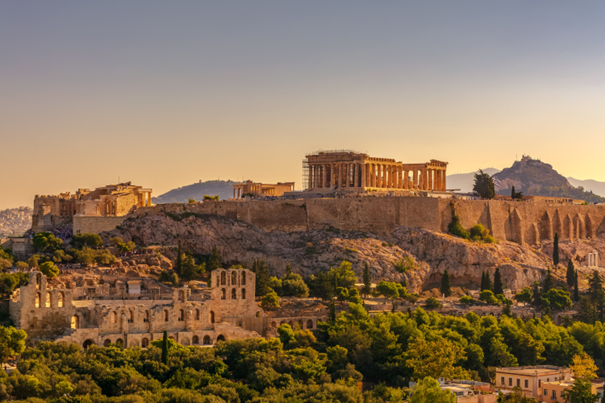
Blick auf die Akropolis von Athen.

Blick auf die Akropolis von Athen.

Bild von [Constantinos Kollias](https://www.pexels.com/@rpnickson/](https://unsplash.com/@ckollias) | Lizenz: [Unsplash](https://www.pexels.com/license/](https://unsplash.com/) | Erstellt: 25. Oktober 2020

Die Entwicklung der Demokratie in Athen wurde maßgeblich von Kleisthenes, einem athenischen Staatsmann, vorangetrieben. Kleisthenes gilt als einer der Väter der athenischen Demokratie, da er Reformen einführte, die die politische Macht auf eine breitere Bevölkerungsschicht verteilten und die traditionellen Machtstrukturen durchbrachen. Eine seiner bahnbrechenden Maßnahmen war die Einführung der Demokratie durch das Losverfahren. Bürger wurden aus der gesamten Bürgergemeinschaft ausgelost, um in verschiedenen politischen Gremien und als Volksvertreter zu dienen.
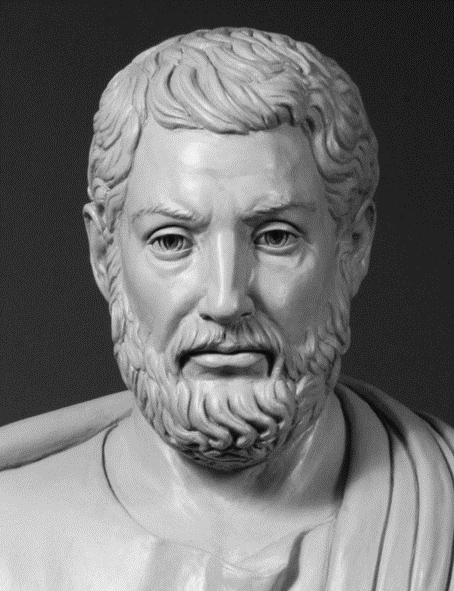
Klisthenes (ca. 570 - ca. 508 v. Chr.).

Klisthenes (ca. 570 - ca. 508 v. Chr.).

Bild von www.ohiochannel.org | Erstellt: 9. August 2012

Später, unter der Führung des Staatsmanns Perikles, wurden weitere Reformen umgesetzt, die die Bürgerbeteiligung stärkten. Die athenische Demokratie war direkt, was bedeutet, dass die Bürger an politischen Entscheidungsprozessen direkt teilnahmen, indem sie in der Volksversammlung abstimmen konnten.

Dieses demokratische Experiment erstreckte sich jedoch nicht auf alle Bewohner Athens. Frauen, Sklaven und Nicht-Bürger waren von der Teilnahme ausgeschlossen. Dennoch war es ein großer Schritt in Richtung einer inklusiveren Gesellschaft und einer gerechteren Regierungsform.

Die Verfassung von Kleisthenes etablierte auch das Konzept der Isonomie, was so viel wie "Gleichheit vor dem Gesetz" bedeutet. Dies war ein bedeutender Schritt in Richtung der Gleichbehandlung aller Bürger.

Athen erlebte während dieser Zeit eine Blüte kultureller Errungenschaften und intellektueller Innovationen. Große Denker wie Sokrates, Platon und Aristoteles lehrten und diskutierten in Athen und trugen zur Entwicklung der Philosophie und Politikwissenschaft bei.

Ein weiteres frühes Beispiel für politische Mitbestimmung findet sich in der römischen Republik. Die Römische Republik setzte Prinzipien für die Rechtsstaatlichkeit und politische Beteiligung. Republic government of Rome is often presented as an early example of representative democracy, where citizens elected officials to govern on their behalf. On the other hand, it is also well argued, that the republican system was an elective oligarchy, not a democracy, because only a small number of powerful families largely were holding the power. Roman senate, not being elected constituted of the wealthiest citizens, who then selected the officials, who were later to be voted on.
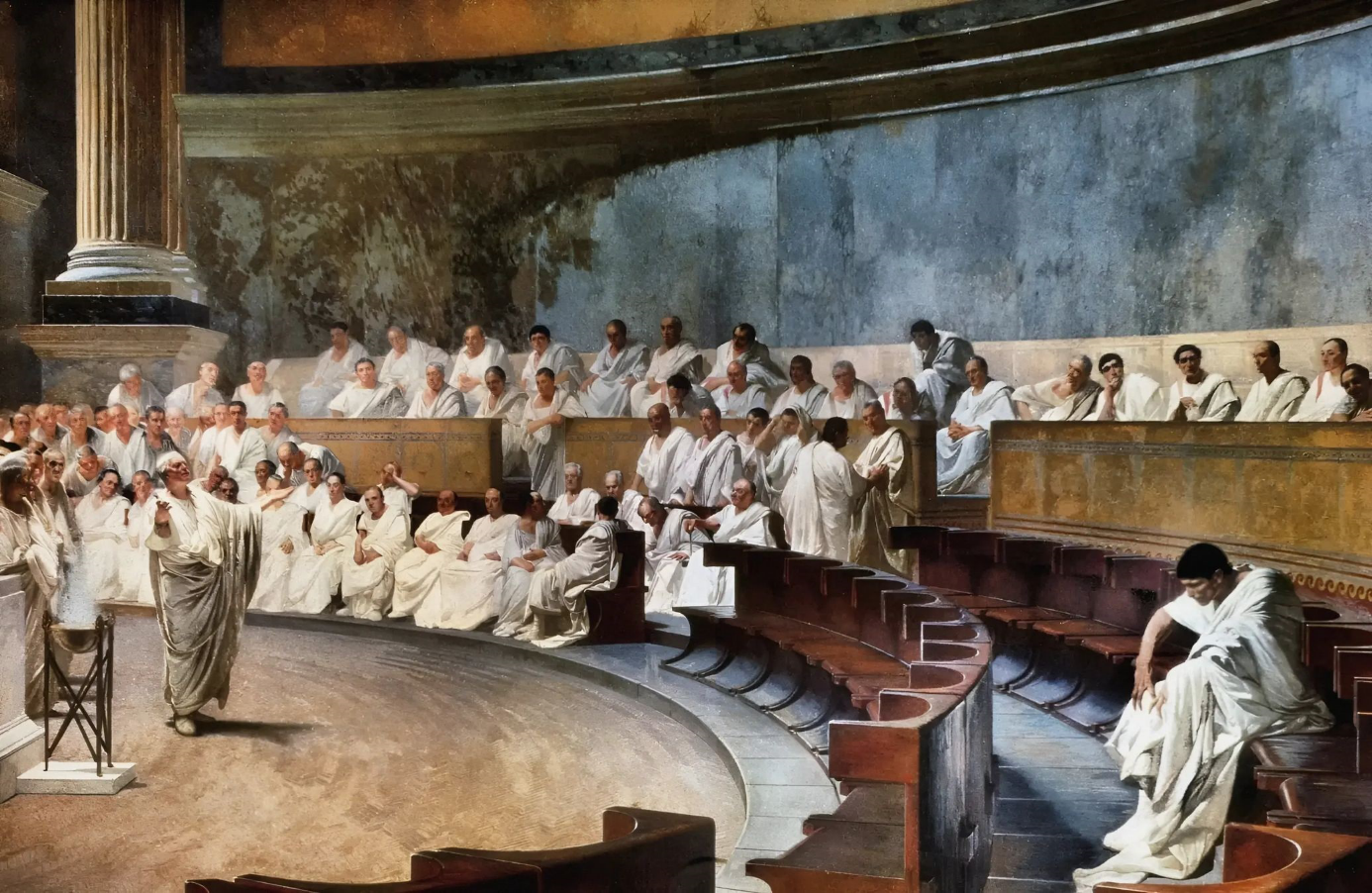
Cicero prangert Catiline im römischen Senat an von Cesare Maccarin.

Cicero prangert Catiline im römischen Senat an von Cesare Maccari.

Ein Fresko von Cesare Maccari | Erstellt: 1889

Der Weg zur modernen Demokratie

Im Laufe der Jahrhunderte entwickelten sich demokratische Prinzipien weiter und inspirierten die Denker der Aufklärung im 17. und 18. Jahrhundert.

In dieser Zeit wurden Schlüsselkonzepte der Demokratie wie Menschenrechte, Meinungsfreiheit und Gewaltenteilung weiterentwickelt. Philosophen wie John Locke, Montesquieu und Jean-Jacques Rousseau trugen wesentlich zur Ausformulierung moderner demokratischer Ideen bei.

Die Geburt der Demokratie, wie wir sie heute kennen, ist das Ergebnis eines langen historischen Prozesses. Moderne Demokratien beruhen auf den Prinzipien der Bürgerbeteiligung, der Rechtsstaatlichkeit und der Gleichheit vor dem Gesetz. Diese Prinzipien haben sich im Laufe der Jahrhunderte entwickelt und sind nach wie vor lebendig und relevant für die Gestaltung von Regierungen und Gesellschaften weltweit.

Die erste Demokratie in Europa in der modernen Welt wird oft der Schweiz zugeschrieben. Die Schweiz hat eine lange Geschichte selbstverwaltender Gemeinden und Kantone, und die Schweizer Eidgenossenschaft, die sich 1291 mit der Unterzeichnung der Bundesbriefe bildete, gilt als eines der frühesten Beispiele eines selbstregierenden und demokratischen Systems in Europa.

Das politische System der Schweiz zeichnet sich durch seine föderale Struktur und ein hohes Maß an direkter Demokratie aus. Die Bürger haben die Macht, Entscheidungen durch Referenden und Initiativen zu beeinflussen, die es ihnen ermöglichen, über bestimmte Gesetze oder Verfassungsänderungen abzustimmen. Dieses System hat als Vorbild für andere Demokratien in der modernen Welt gedient.

Es ist wichtig zu beachten, dass die Entwicklung der Demokratie in Europa ein komplexer und allmählicher Prozess war, bei dem verschiedene Länder und Regionen demokratische Prinzipien zu unterschiedlichen Zeiten und auf unterschiedliche Weisen übernahmen. Der einzigartige historische Weg der Schweiz zur Demokratie ist ein bemerkenswertes frühes Beispiel.

Im Laufe der Zeit entwickelten sich verschiedene Modelle der Demokratie. Heutzutage gibt es Demokratien auf der ganzen Welt, die sich in ihrer Ausgestaltung und Funktionsweise unterscheiden, aber alle das gemeinsame Ziel verfolgen, die Beteiligung der Bürger an politischen Entscheidungen sicherzustellen.

Die Geburt der Demokratie war ein langer und komplexer Prozess, der von verschiedenen Kulturen und historischen Ereignissen geprägt wurde. Heute ist die Demokratie eine der vorherrschenden Regierungsformen auf der Welt und steht für die Idee, dass die Stimme eines jeden Bürgers zählt und die Grundrechte und Freiheiten geachtet werden.


🇬🇧ENGLISH

Voting Procedure.

Voting Procedure.

The Birth of Democracy

The idea of democracy is one of the most significant achievements in the history of human societies. It represents the notion that power in the state comes from the people, and citizens have the right to participate in political decisions. However, the birth of democracy was a gradual process that spanned many centuries and was influenced by various civilizations.

The birth of democracy took place in the 5th century BC in Athens. At that time, the city was a prosperous center of trade and culture. However, the political order was heavily oligarchic, meaning that power was concentrated in the hands of a small elite of nobles. This led to dissatisfaction among the population.

View of the Acropolis of Athens.

View of the Acropolis of Athens.

Image by [Constantinos Kollias](https://www.pexels.com/@rpnickson/](https://unsplash.com/@ckollias) | License: [Unsplash](https://www.pexels.com/license/](https://unsplash.com/) | Created: October 25, 2020

The development of democracy in Athens was significantly advanced by Cleisthenes, an Athenian statesman. Cleisthenes is regarded as one of the fathers of Athenian democracy, as he introduced reforms that distributed political power to a broader segment of the population and broke traditional power structures. One of his groundbreaking measures was the introduction of democracy through a lottery system. Citizens were randomly selected from the entire citizen community to serve in various political bodies and as representatives of the people.

Cleisthenes (ca. 570 - ca. 508 BC).

Cleisthenes (ca. 570 - ca. 508 BC).

Image by www.ohiochannel.org | Created: August 9, 2012

Later, under the leadership of the statesman Pericles, further reforms were implemented that strengthened citizen participation. Athenian democracy was direct, meaning that citizens participated directly in political decision-making by voting in the assembly.

However, this democratic experiment did not extend to all residents of Athens. Women, slaves, and non-citizens were excluded from participation. Nevertheless, it was a significant step toward a more inclusive society and a fairer form of government.

The constitution of Cleisthenes also established the concept of Isonomy, which means "equality before the law." This was a significant step toward equal treatment of all citizens.

During this time, Athens experienced a flourishing of cultural achievements and intellectual innovations. Great thinkers like Socrates, Plato, and Aristotle taught and discussed in Athens, contributing to the development of philosophy and political science.

Another early example of political co-determination can be found in the Roman Republic. The Roman Republic established principles for the rule of law and political participation. The Republic government of Rome is often presented as an early example of representative democracy, where citizens elected officials to govern on their behalf. On the other hand, it is also well argued that the republican system was an elective oligarchy, not a democracy, because only a small number of powerful families largely held the power. The Roman Senate, not being elected, consisted of the wealthiest citizens, who then selected the officials, who were later to be voted on.

Cicero Denounces Catiline in the Roman Senate by Cesare Maccari.

Cicero Denounces Catiline in the Roman Senate by Cesare Maccari.

A fresco by Cesare Maccari | Created: 1889

The Path to Modern Democracy

Over the centuries, democratic principles evolved and inspired Enlightenment thinkers in the 17th and 18th centuries.

During this time, key concepts of democracy such as human rights, freedom of expression, and the separation of powers were further developed. Philosophers like John Locke, Montesquieu, and Jean-Jacques Rousseau significantly contributed to the formulation of modern democratic ideas.

The birth of democracy, as we know it today, is the result of a long historical process. Modern democracies are based on the principles of citizen participation, the rule of law, and equality before the law. These principles have evolved over the centuries and remain alive and relevant for shaping governments and societies worldwide.

The first democracy in Europe in the modern world is often attributed to Switzerland. Switzerland has a long history of self-governing communities and cantons, and the Swiss Confederation, which was formed in 1291 with the signing of the Federal Charters, is considered one of the earliest examples of a self-governing and democratic system in Europe.

The political system of Switzerland is characterized by its federal structure and a high degree of direct democracy. Citizens have the power to influence decisions through referendums and initiatives, allowing them to vote on specific laws or constitutional amendments. This system has served as a role model for other democracies in the modern world.

It is important to note that the development of democracy in Europe was a complex and gradual process, with different countries and regions adopting democratic principles at different times and in different ways. The unique historical path of Switzerland to democracy is a remarkable early example.

Over time, various models of democracy have developed. Today, there are democracies around the world that differ in their design and functioning, but all share the common goal of ensuring citizen participation in political decisions.

The birth of democracy was a long and complex process shaped by various cultures and historical events. Today, democracy is one of the predominant forms of government in the world and represents the idea that every citizen's voice counts and that fundamental rights and freedoms are respected.

💡 Click on any highlighted word to see its definition, examples, and pronunciation

Master Your Skills

Practice makes perfect

Reinforce your learning with interactive exercises. Try these examples to see how practice helps you master German vocabulary.

Replace the synonym

Which word can replace the highlighted word?

Das Wetter ist heuteschönund sonnig.

💡 Interactive exercises help reinforce vocabulary through practice • 2 steps per exercise

The Science Behind Learning

How KoalaReads Works

Combining contextual learning with the proven SM2 spaced repetition algorithm

Koala reading a German book

Read Authentic Content

Engage with curated German articles. Tap any word for instant definitions, grammar notes, and example sentences.

Koala using a German dictionary

Build Your Vocabulary

Save words to your personal collection with pronunciation, declensions, and contextual examples from the readings.

Koala practicing spaced repetition

Spaced Repetition

Best Value for German Learners

Start learning today

One simple plan with everything you need to master German through reading

Launch Offer
$9/month
First 2 months free

Full access to all features with no hidden fees or surprises. Cancel anytime.

Everything included

  • Unlimited reading access

About KoalaReads

KoalaReads combines authentic German reading materials with integrated vocabulary support, making language learning natural and effective.

Build practical vocabulary through contextual learning and improve reading comprehension with diverse, topic-rich content.

Read more, Learn more.
KoalaReads mascot - a koala reading a book
Connect With Us

Get in touch

Have questions or feedback? We'd love to hear from you.

Email Us
Follow Us
KoalaReads logoKoalaReads
ReadingsClassroomAboutTermsPrivacyLegal Notice
© 2026 KoalaReads. All rights reserved.
Explore more readings→

Learn words before you forget them. Using the SM2 algorithm, the system schedules reviews at the optimal time based on your performance.

The SM2 Algorithm

Spaced Repetition Based on Performance

Developed by Piotr Woźniak in 1987, the SuperMemo 2 algorithm calculates optimal review intervals based on how easily you recall each word. The better you know a word, the longer the interval before your next review.

1

Initial Learning

New words start with short intervals: 1 day, then 6 days

2

Rate Difficulty

After each review, rate how easily you recalled the word (0-5)

3

Calculate Interval

Algorithm adjusts next interval based on your rating and history

4

Optimize Retention

Review just before you're likely to forget, maximizing efficiency

Complete vocabulary library
  • Interactive practice exercises
  • SM2 spaced repetition
  • Progress tracking
  • All content categories
  • Audio pronunciations
  • Mobile & desktop access
  • Regular content updates
  • Priority support
  • GitHub